

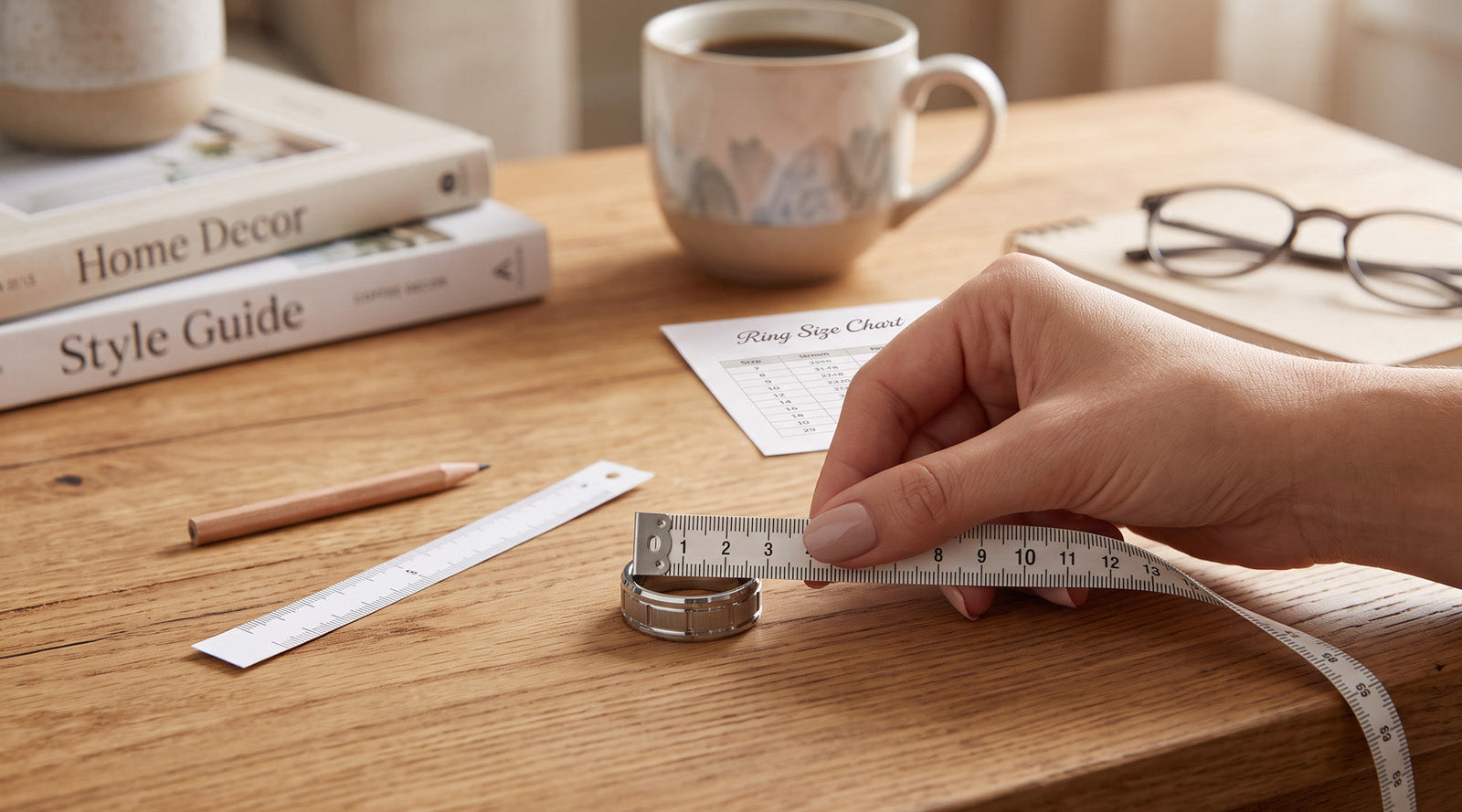

How to Measure Ring Size at Home With Confidence
A ring can look spectacular in the box, but the real magic happens when it slips on comfortably and stays put. Whether you are choosing a wedding band, planning a personalised gift or treating yourself to an opal, wood inlay or moissanite statement piece, knowing how to measure ring size properly takes the stress out of ordering online.
The best method depends on what you have to hand. An existing ring gives the most reliable at-home result, while a printable or physical sizer is ideal if you are buying a first ring or trying to keep a surprise under wraps. Take a few minutes, measure at the right time of day and leave room for real life - warm weather, cold hands and knuckles all affect fit.
How to measure ring size with a ring you already own
If you have a ring that fits the correct finger well, start there. It should be a ring worn on the same hand and finger you are buying for. Your dominant hand is often slightly larger, so a ring that fits the left ring finger may not be right for the right.
Place the ring flat on a ruler and measure the inside diameter, from one inner edge to the opposite inner edge, in millimetres. Do not include the metal itself. Measure at the widest point of the inner circle, then compare that diameter with the retailer's ring size chart.
For a more accurate result, repeat the measurement two or three times. A difference of even half a millimetre can move you between UK sizes, especially with narrow bands. If your ring is not perfectly round, use the widest inside measurement and check the fit of the original ring again before ordering.
This is usually the strongest at-home option because it measures a ring you already know feels good. It is less useful, however, if the new design has a much wider band. A chunky wedding ring or double-inlay style can feel snugger than a slim eternity ring in the same size.
Use a ring sizer for the clearest answer
A proper adjustable ring sizer is the simplest route when you do not own a suitable ring to copy. It works like a tiny belt: slide it onto the chosen finger, tighten it until it is comfortable, and check the letter shown where the loop meets the scale.
A good fit should move over the knuckle with gentle resistance. It should not spin freely at the base of your finger, but it should not pinch, leave a deep mark or need a determined tug to remove. Test it several times rather than deciding from one quick try.
At Rock Solid Rings, a free ring sizer helps take the guesswork out of finding your fit before you choose a ring. It is particularly useful for wedding bands and engraved designs, where getting the size right first makes the order feel even more exciting.
What about printable ring sizers?
A printable sizing guide can be handy when time is tight, but accuracy comes down to your printer settings. Print at 100% scale, never use “fit to page”, and check the guide's calibration square with a ruler before measuring anything else.
If the guide has circles, place your existing ring over them and match the inside edge of the band to the printed circle. The outside edge is not relevant. If you fall between two circles, do not guess based on appearance alone. Measure the inner diameter with a ruler too, or use a physical sizer for confirmation.
How to measure ring size with paper
No ring and no sizer? A thin strip of paper can give you a useful starting point. It is not as precise as measuring an existing ring or using a proper sizer, but it can help you narrow down your likely size.
Wrap a narrow paper strip around the base of the finger. Mark the spot where the paper overlaps, then lay it flat and measure its length in millimetres. That number is your finger circumference. Match it to a UK ring size chart.
Avoid string, thick card or anything stretchy. These materials can pull tight or distort, leading to a size that feels fine for five seconds but is too small in daily wear. Paper also does not account for your knuckle, so slide the loop over the knuckle before marking it. If it cannot pass comfortably, add a little room and measure again.
For the best chance of success, take three measurements and use the most consistent result. If they vary, your fingers may be changing temperature or you may be pulling the paper differently each time. Pause, warm or cool your hands naturally, then retry.
When should you measure your finger?
Timing matters more than many shoppers expect. Fingers naturally swell and shrink throughout the day, so measuring first thing in the morning can produce a result that is too small for an evening out. Measure in the late afternoon or evening, when your hands are at a normal, comfortable temperature.
Wait if you have just exercised, had a hot shower, been outside in cold weather or eaten a particularly salty meal. Heat, activity and salt can all cause temporary swelling. Equally, chilly fingers can be smaller than usual, making a ring seem looser than it will later.
If you are between sizes, consider the ring style and your usual comfort preference. For a wide band, many people prefer to go up slightly because more metal sits against the finger. For a slim stacking ring, your standard size is often the better choice. A comfort-fit band with a rounded interior may also feel easier to wear than a flat-profile ring of the same size.
Getting a partner's ring size without spoiling the surprise
A surprise ring is a brilliant gesture, but it calls for a little detective work. The safest option is to borrow a ring they already wear on the right finger and measure its inner diameter. Choose discreetly and return it promptly - a missing favourite can give the game away.
If that is not possible, ask a close friend or family member if they know the size, or casually try on rings together while browsing shops. Avoid relying on shoe size, height or general build. There is no dependable conversion, and fingers vary far more than people think.
When the ring is a gift, choose a design with the fit in mind. Highly detailed engraved bands, eternity rings with stones all the way around, and certain inlay styles can be more difficult to resize than a simple plain band. That does not mean you should avoid the design they will love. It simply makes careful sizing, plus a retailer with straightforward exchanges and returns, especially valuable.
Common ring sizing mistakes to avoid
The most common mistake is measuring the wrong finger. Always check the finger and hand where the new ring will be worn. Another is measuring once and treating the result as final, even when your hands are cold or your paper strip feels overly tight.
It is also easy to focus only on the base of the finger and forget the knuckle. Your ring needs to travel over both. Finally, do not assume every ring that technically fits will feel equally comfortable. Band width, profile, weight and your preferred fit all make a difference.
A ring should feel like part of your style, not a compromise you notice every time you reach for a coffee, type a message or hold someone’s hand. Measure carefully, trust the fit test over a rushed guess, and you can choose the ring that is ready for the big moment - and every ordinary, brilliant day after it.
Also in Articles
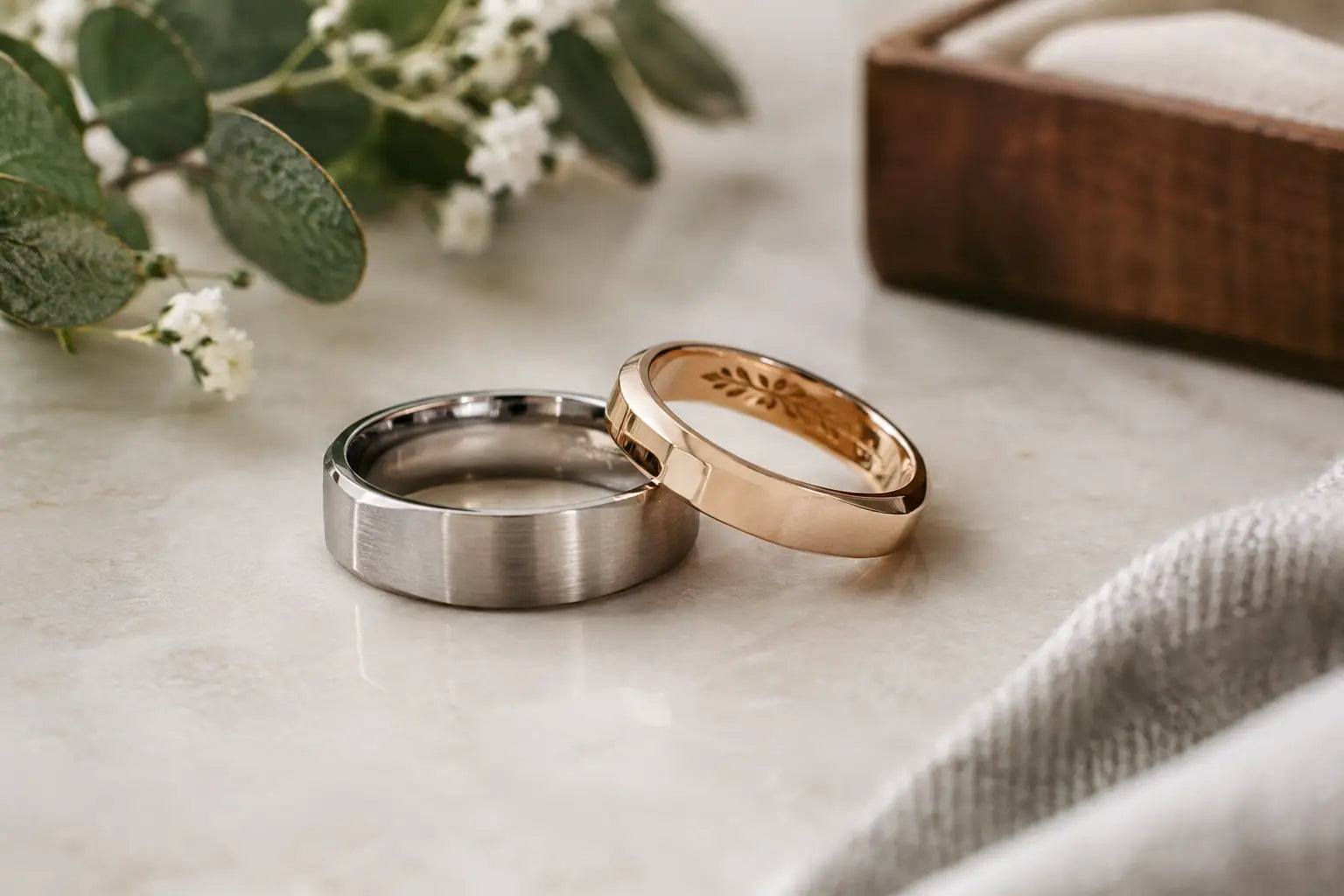

25 Couples Ring Engraving Ideas That Feel Personal
Find couples ring engraving ideas that turn wedding bands, promise rings and anniversary gifts into personal keepsakes, with smart tips on space and style.
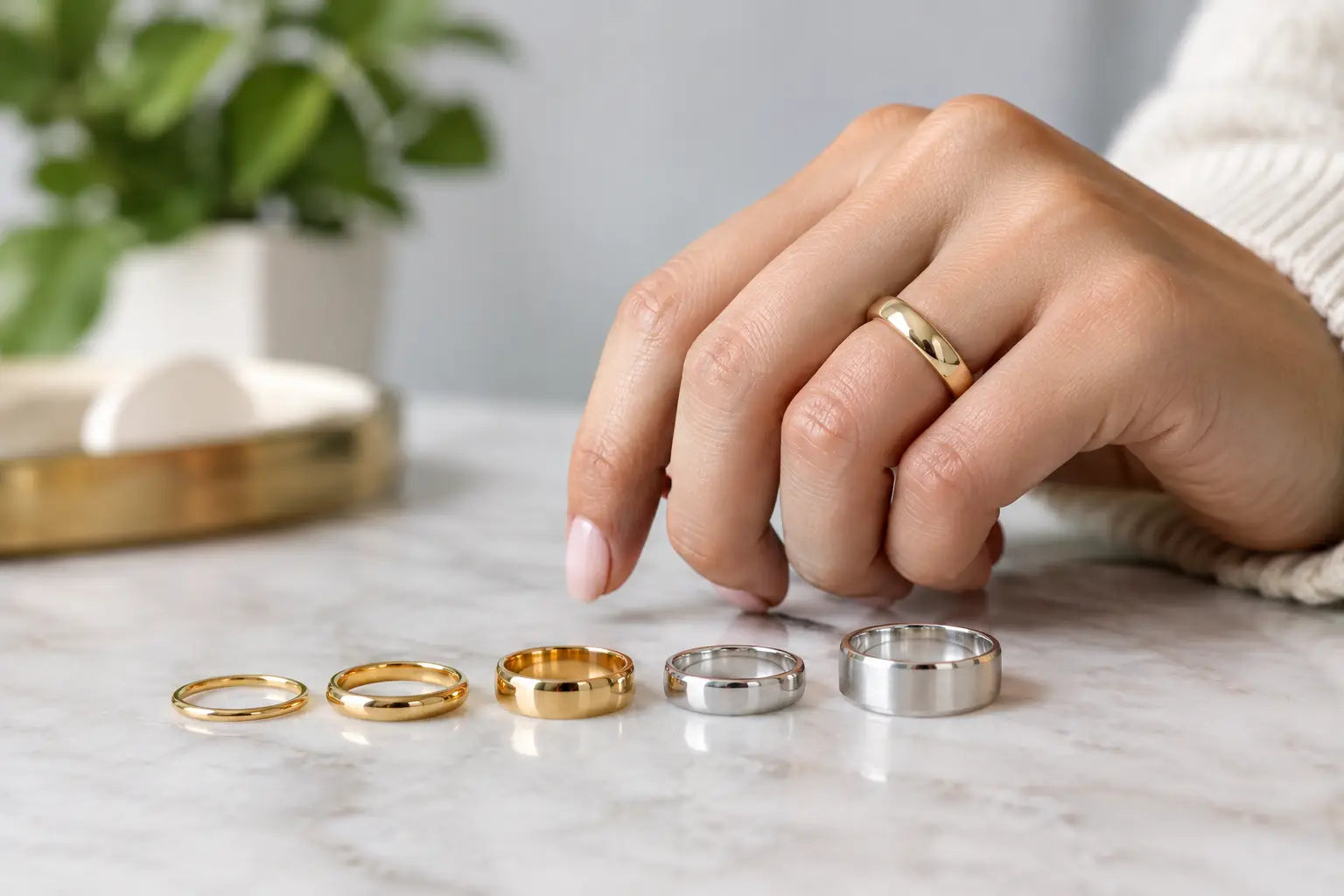

How to Select Ring Width That Looks Just Right
Learn how to select ring width for comfort, proportion and everyday style, from slim stacking bands to bold wedding rings that feel as good as they look.
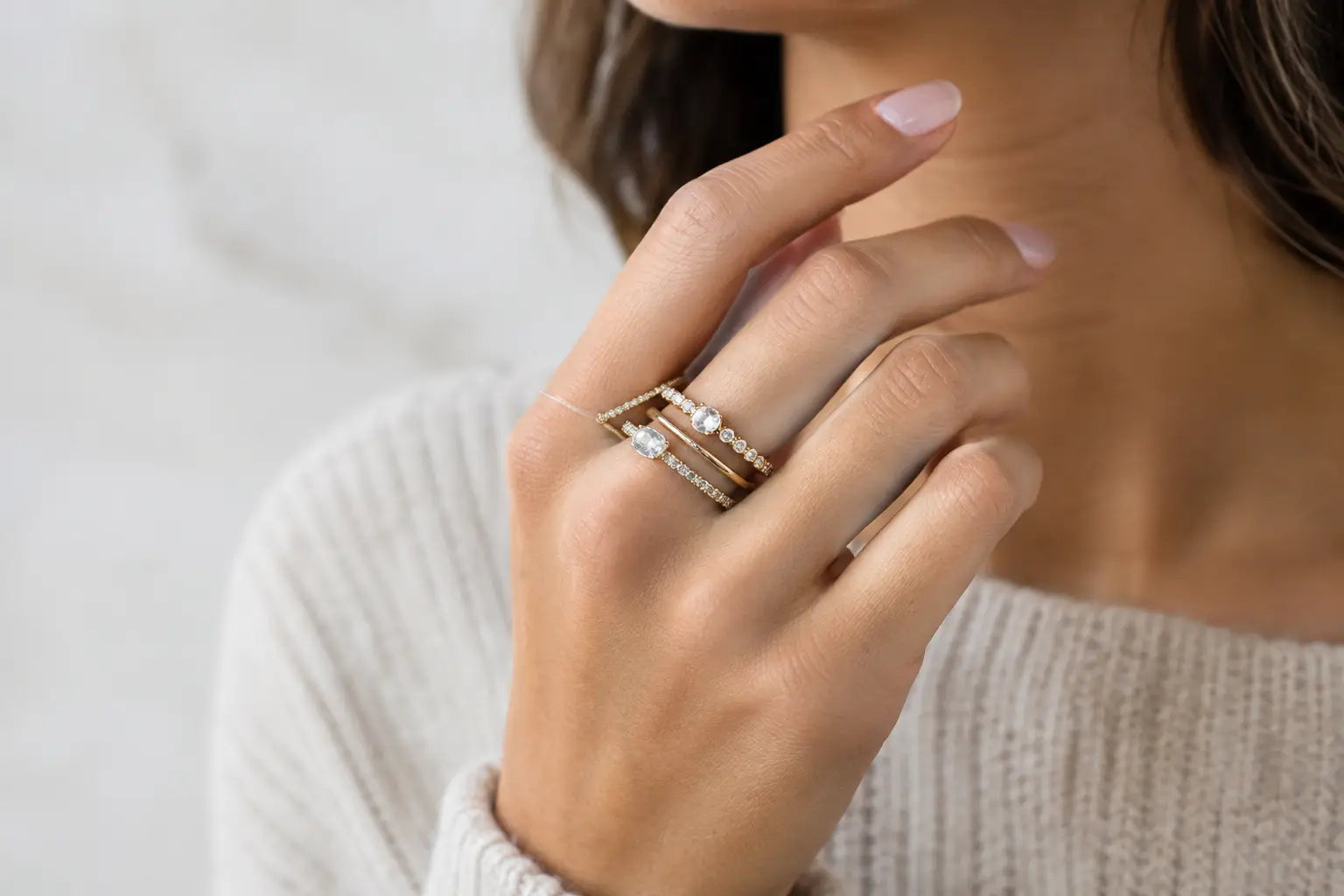

Ring Stacking Ideas That Look Effortlessly Put Together
Ring stacking made simple: choose shapes, metals and stones that feel personal, sit comfortably and look polished from weekday to wedding day with ease.
PayPal Pay Later Messaging
Step 1: Choose message placement
Click the button below and then hover over your page to select a placement.