

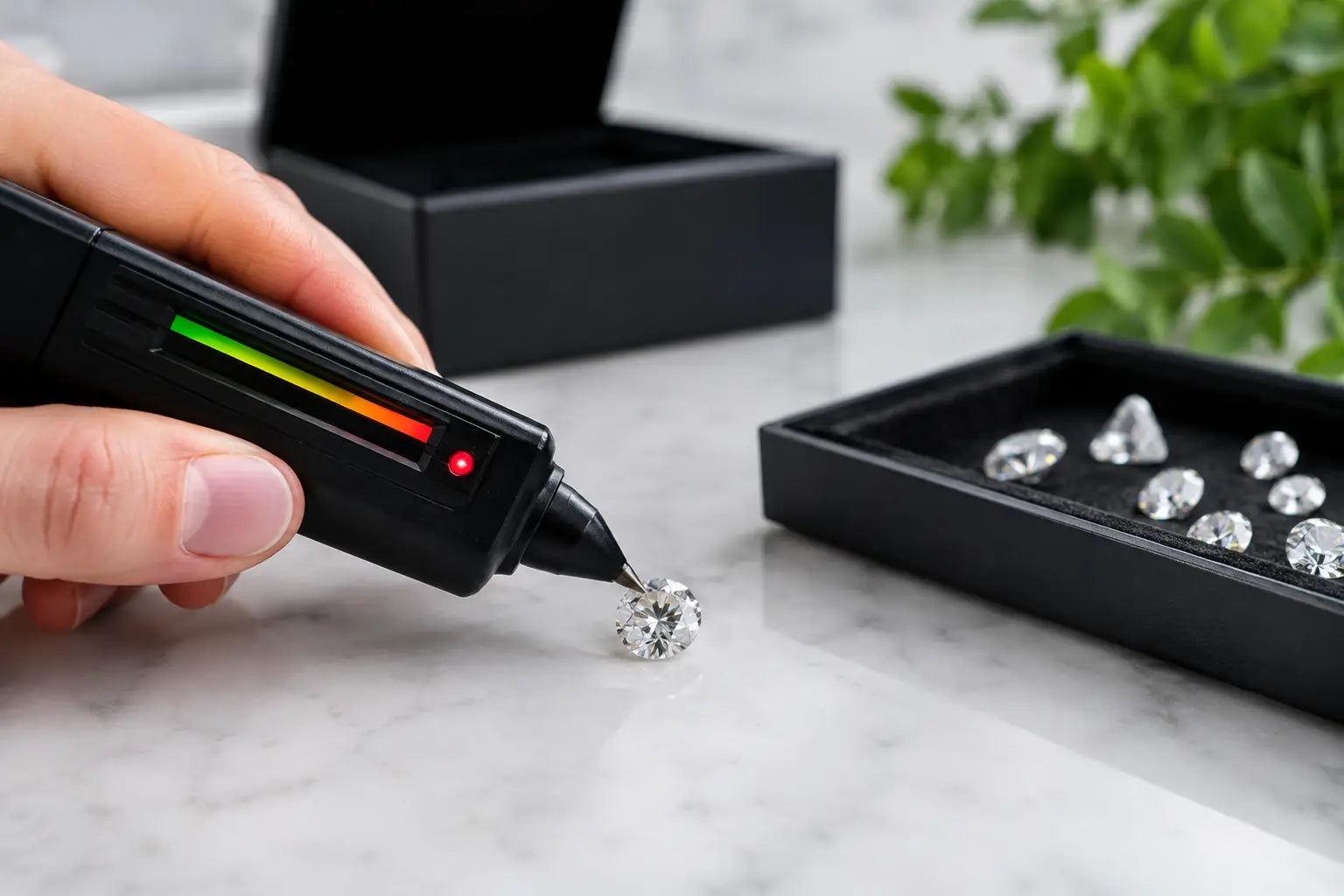

What Moissanite Tester Results Really Mean
A ring can look brilliantly diamond-like and still give surprising moissanite tester results. That is not automatically a red flag. Many handheld testers are designed to detect thermal conductivity, and moissanite conducts heat in a way that can make a basic diamond tester react positively too.
For anyone choosing an engagement ring, anniversary gift or standout everyday piece, the key is knowing what the reading can tell you - and what it cannot. A tester is useful, but it is only one part of identifying a stone with confidence.
Why moissanite tester results can look like diamond results
Moissanite is a gemstone with impressive sparkle, excellent durability and a very diamond-like appearance. It is also highly thermally conductive. Traditional diamond testers identify diamonds by measuring how quickly heat travels through the stone. Because moissanite performs similarly in this test, a standard thermal tester may beep, light up or indicate “diamond” when placed on moissanite.
That does not mean the tester is broken, and it does not mean the stone has been misrepresented. It means the tool is detecting a property shared by both materials.
This is why a basic diamond tester is not the right tool for separating moissanite from diamond. It can help distinguish a diamond or moissanite from common lookalikes such as glass or cubic zirconia, but it cannot reliably tell those two premium stones apart.
The tester type makes all the difference
A thermal-only tester measures heat movement. It is the most common type and the one most likely to produce a diamond-style reading on moissanite.
A combined diamond and moissanite tester is more sophisticated. Alongside thermal conductivity, it also checks electrical conductivity. Natural diamonds generally do not conduct electricity in the same way moissanite does, so a quality dual tester can give a clearer indication of which stone you have.
Even then, treat the result as a strong clue rather than a final verdict. Tester quality, battery level, stone size and how the ring is set can all affect accuracy.
How to read your moissanite tester results
Start by checking the instructions for your specific tester. The lights, sounds and labels vary between models, so there is no universal display pattern. Some dual testers show a separate moissanite light. Others show diamond on one scale and moissanite on another.
If a thermal-only tester identifies your stone as diamond, the practical reading is usually: this stone has high thermal conductivity. It may be diamond or moissanite. It is not proof of either one on its own.
If a combined tester gives a moissanite reading, that is a more useful result. Make sure the probe has touched the centre of the gemstone rather than the metal setting, then repeat the test a couple of times. Consistent results matter more than one quick reading.
If the result is inconsistent, do not panic. Small stones, clustered settings and dirty jewellery can all make testers harder to use. Give the ring a gentle clean, allow it to reach room temperature and try again with a steady hand.
Why settings can interfere with a reading
Rings are trickier to test than loose stones. The tester tip needs clean contact with the stone, and it needs to stay away from the prongs or bezel. If the probe touches metal, the reading may be inaccurate. This is especially easy to do with petite stones, halo designs, eternity bands and closely set wedding rings.
Very small stones can also fall below a tester’s reliable range. A centre stone may test clearly while tiny accent stones do not register at all. That is normal and not a reason to assume the stones are different.
Moisture, skin oils and everyday residue can create another obstacle. Wipe the stone with a soft, clean cloth before testing. If the ring has just been worn, leave it for a few minutes first. A cold ring fresh from a chilly post box or a warm ring straight from your hand may not give the cleanest initial result.
A positive diamond reading does not mean you have been sold a diamond
This point causes most of the confusion. Moissanite is often chosen specifically because it delivers exceptional fire, brightness and a premium-looking finish without the traditional diamond price. It is not a substitute pretending to be something else when it is accurately described and sold as moissanite.
If your ring was purchased as moissanite and a basic diamond tester reacts, that result is completely expected. It reflects the stone’s physical properties, not a mismatch between the product and the description.
Moissanite also has a different visual character from diamond. Many people love its bold flashes of colour, particularly under bright lighting. Some prefer a more understated sparkle. Neither preference is wrong - it comes down to the look you want, the design of the ring and your budget.
For a wedding ring or engagement-style ring, moissanite can be an appealing choice because it is hard enough for regular wear and offers serious presence for the price. The trade-off is simply that it is not a natural diamond, and its sparkle can look more vivid in certain lighting conditions.
When to get a professional opinion
A home tester is ideal for reassurance, curiosity and checking whether a stone behaves like a high-conductivity gem. It is not the best route if you need formal identification, an insurance valuation or confirmation of a stone’s origin.
Take the ring to a reputable jeweller when the answer genuinely matters. They can inspect the stone with professional equipment, assess the setting and, where appropriate, provide documentation or direct you towards independent verification. This is particularly sensible for inherited jewellery, second-hand purchases or a ring that was described vaguely.
Be cautious about relying on social media “tests” involving fog, breath, water or sparkle comparisons. They may be entertaining, but they are not reliable gemstone identification methods. The same goes for judging solely by whether a stone reflects rainbow colours. Lighting, cut and camera settings can change the appearance dramatically.
How to test a moissanite ring more accurately at home
For the most dependable home test, use a dual diamond and moissanite tester from a reputable supplier. Read the manufacturer’s guidance before switching it on, because many units need a warm-up period or calibration check.
Test the largest accessible stone first. Hold the ring securely, keep the probe upright and touch the centre of the stone with light, steady pressure. Repeat the check two or three times rather than trusting a single flash or beep. If your ring has a halo or side stones, test each accessible stone individually and avoid brushing the metalwork.
It also helps to compare the result with the item description and any paperwork that came with the ring. A clear product description, consistent tester reading and the stone’s overall appearance create a much stronger picture together than any one factor alone.
At Rock Solid Rings, moissanite is chosen for shoppers who want maximum sparkle, meaningful design and a price that leaves room for the rest of life. The point is not to make a stone pass as something it is not. It is to choose a beautiful ring confidently because it suits your style, your occasion and your budget.
A tester can add reassurance, but the best result is a ring you are excited to wear. Check with the right tool, ask questions when something does not add up, and enjoy the fact that a brilliant moissanite ring is meant to turn heads.
Also in Articles
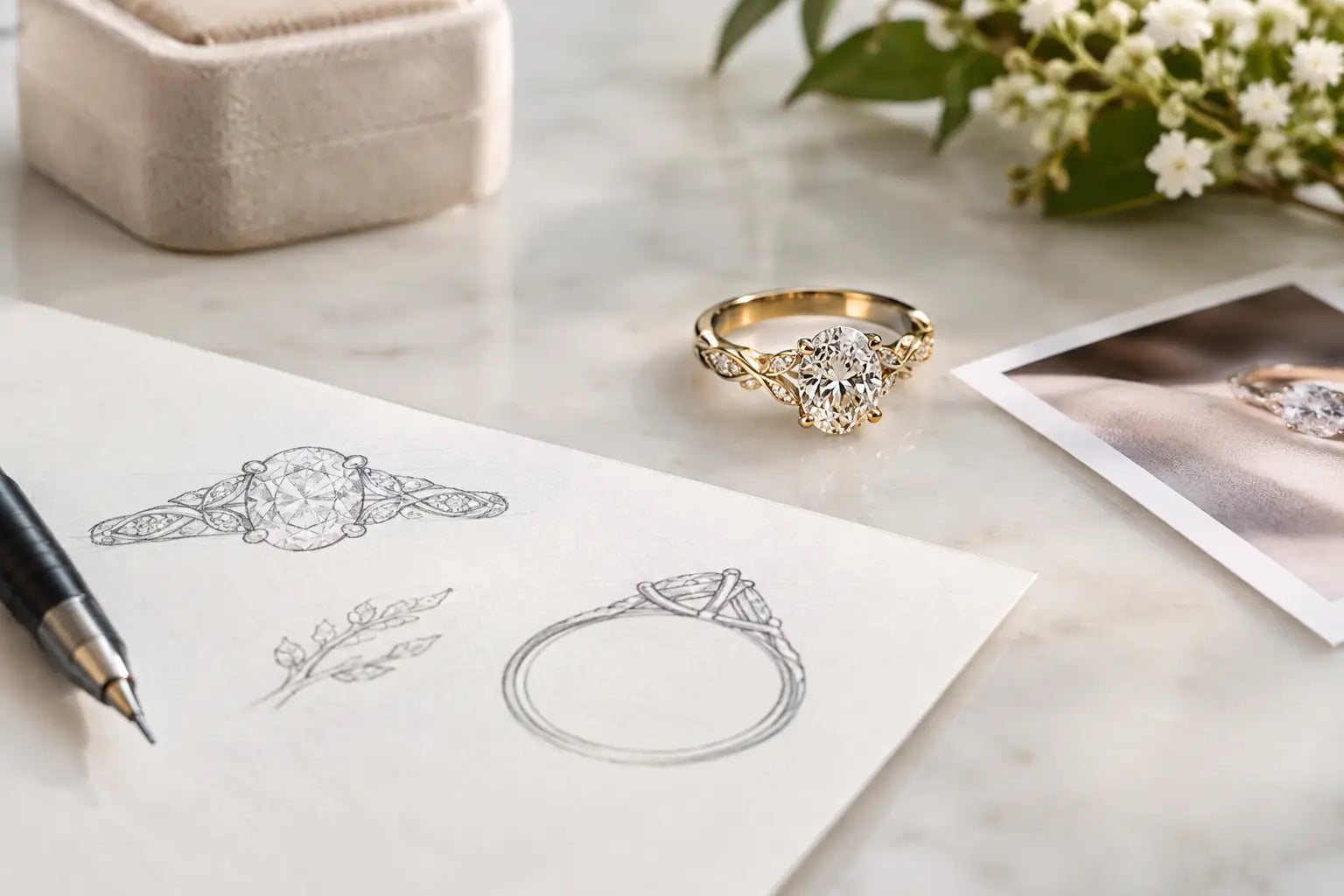

Custom Ring Design Example: Make It Personal
See a custom ring design example that balances style, meaning and daily wear, with smart choices for metal, inlays, engraving and fit for online orders.
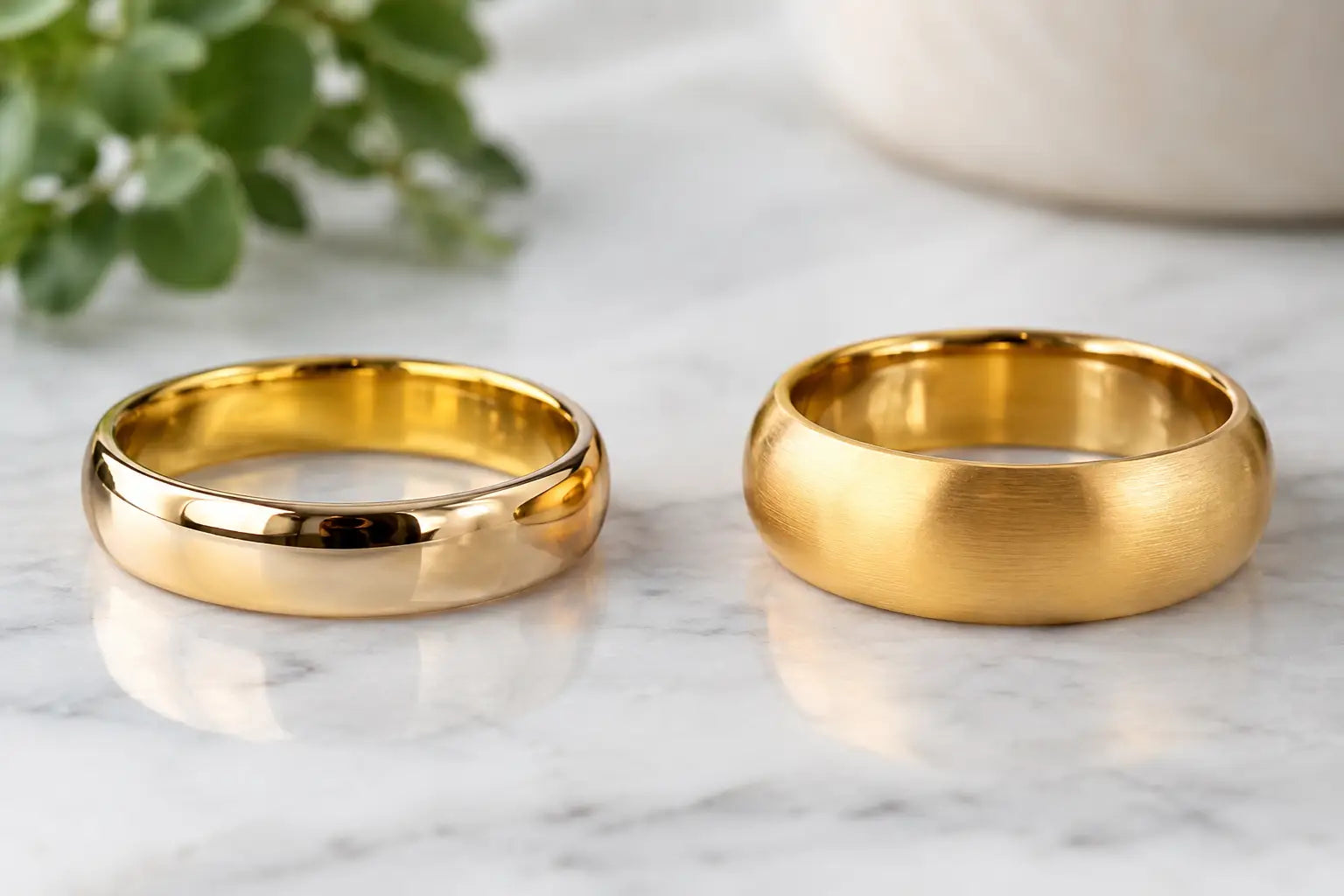

Gold Plated Versus Solid Gold: Which Is Best?
Gold plated versus solid gold explained: compare cost, durability, skin sensitivity and everyday wear to choose the right ring, chain or gift for you.


A Guide to Ring Setting Styles for Every Hand
Use our guide to ring setting styles to compare sparkle, security and comfort, then choose a ring that suits your hand, routine and budget with confidence.
PayPal Pay Later Messaging
Step 1: Choose message placement
Click the button below and then hover over your page to select a placement.