


What a Scratch Proof Wedding Band Can Handle
Your wedding ring should look as good at the supermarket checkout, on the school run or halfway through a DIY job as it did on the day you said “I do”. That is why a scratch proof wedding band is such a popular choice for couples who want meaningful jewellery without treating it like a museum piece.
The honest answer is that no ring is completely immune to every mark, knock and hard surface. But some materials are dramatically better than others at resisting the fine scratches that can quickly dull a polished finish. The right band lets you wear your commitment every day with far less worry - and still gives you the style, comfort and personal touch you want.
What does scratch proof really mean?
“Scratch proof” is often used as shorthand for a ring that is highly scratch resistant. It does not mean you can drag it across concrete, hit it with a hammer or wear it through every heavy-duty task without risk. Jewellery materials have different strengths: one may resist surface scratches brilliantly but be less forgiving of a hard impact, while another can take a knock yet develop a softer, lived-in patina over time.
For most people, the goal is simple. You want a wedding band that stays smart through normal life: typing, driving, cooking, lifting, travelling, working and celebrating. A harder material is usually the best starting point, especially if you work with your hands or simply do not want to be constantly checking your ring for new marks.
Best materials for a scratch proof wedding band
Material matters more than almost any other design detail. A bold finish or striking inlay may catch your eye first, but the metal or ceramic body determines how confidently the ring will handle daily wear.
Tungsten: the hard-wearing favourite
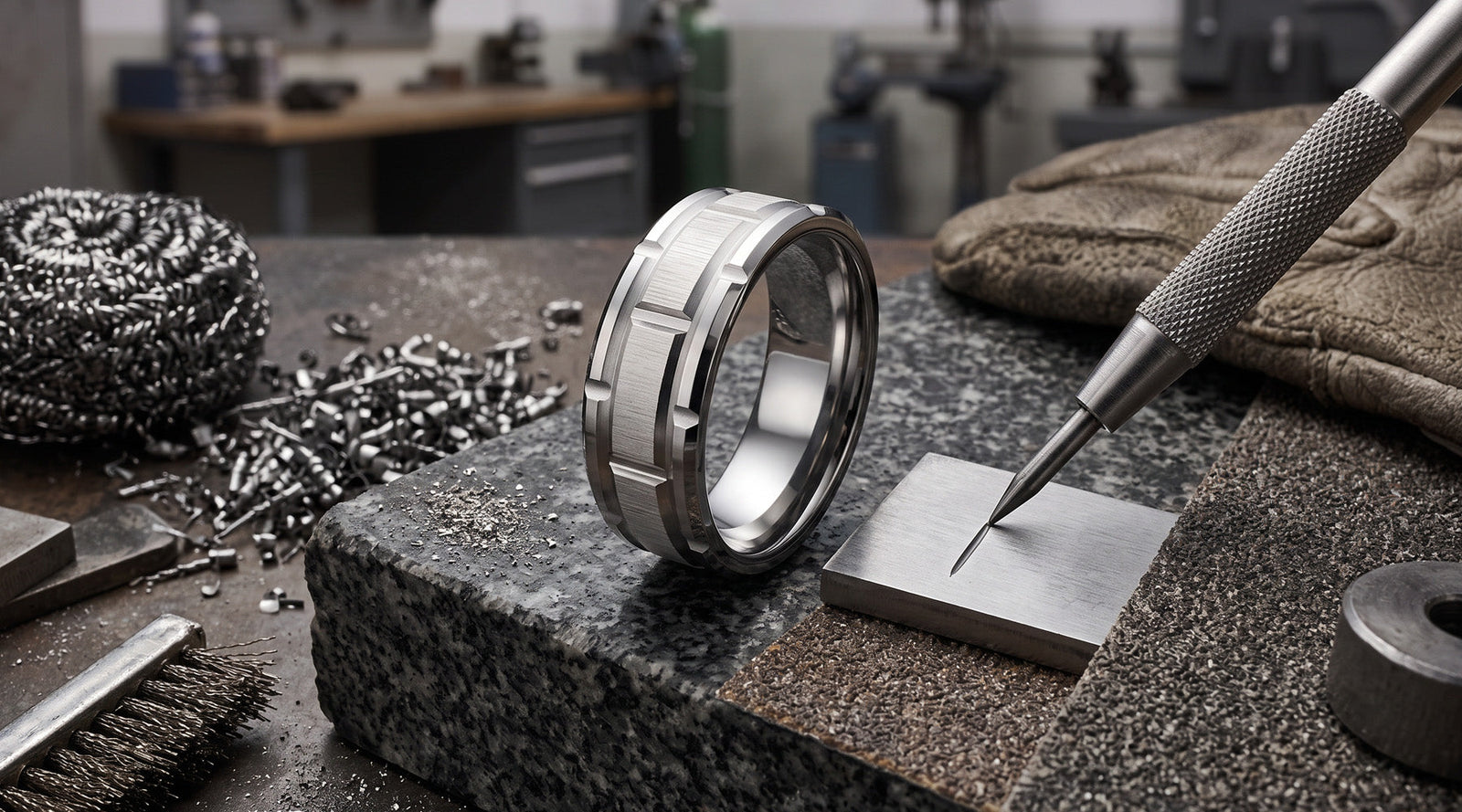
Tungsten wedding bands are widely loved for their weighty feel, polished appearance and exceptional scratch resistance. They are much harder than traditional precious metals, so they are a strong match for anyone who wants a sleek ring that keeps its shine with minimal fuss.
They also offer excellent value. You can choose a modern black, silver, gold-tone or textured tungsten design and get a premium-looking finish without the price often attached to gold or platinum.
There is one trade-off. Tungsten is very hard, but it is not flexible. Under an unusually severe impact, it can crack rather than bend. That does not make it a poor choice for everyday wear - it simply means it is best to take it off for high-impact work, weight training or jobs involving heavy machinery.
Ceramic: light, modern and seriously scratch resistant
Ceramic rings have a smooth, contemporary look and a surprisingly strong resistance to everyday surface scratching. They are especially popular in black and white finishes, where their clean colour and high-gloss polish create a sharp, fashion-forward effect.
Unlike some heavyweight metals, ceramic feels light on the finger. It is ideal if you dislike the substantial feel of tungsten but still want a durable band that looks freshly polished for longer.
As with tungsten, ceramic is less likely to bend than a softer metal. It is a great option for everyday style, but remove it before activities where a powerful direct knock is likely.
Cobalt chrome: a bright alternative with strength
Cobalt chrome has a bright white appearance that appeals to shoppers who like the look of traditional precious metal but want greater durability. It is hard-wearing, comfortable and generally more resistant to scratches than gold, silver or platinum.
It can be a particularly good middle ground if you want a classic-looking wedding band with a more practical edge. Its reflective finish works beautifully with brushed centres, bevelled edges and subtle engraved details.
Titanium: tough, lightweight and easy to wear
Titanium is exceptionally light, strong and comfortable, which makes it a favourite for people who are not used to wearing rings. It handles daily life well and will not feel bulky, even in wider band styles.
It is not as scratch resistant as tungsten or ceramic, so a titanium ring may show signs of wear over time. That said, many wearers like its characterful patina. If low weight and all-day comfort matter more than a permanently mirror-like finish, titanium is a brilliant choice.
Why gold and platinum need a different mindset
Gold and platinum wedding rings are timeless for good reason. They carry tradition, can often be resized, and have a softness and warmth that many couples love. However, they are not the natural choice if your top priority is avoiding scratches.
Gold can mark relatively easily, particularly at higher carats where the metal is softer. Platinum is durable in a different way: rather than losing metal easily, it often develops a soft patina as the surface shifts with wear. Some people adore that character. Others prefer the crisp look of a harder alternative.
Choosing a scratch-resistant band is not about saying one material is better than another. It is about matching the ring to the person wearing it. A chef, mechanic, gym regular or hands-on parent may value tungsten’s everyday resilience. Someone who wants a ring to age with them may be delighted by platinum’s evolving finish.
The design details that affect durability
A ring’s material is the foundation, but its design can make a real difference too. A simple, smooth band has fewer exposed details to catch or wear down than a ring with raised stones, deep grooves or prominent edges.
Brushed and matte finishes are practical because they can disguise fine marks better than a high-polish surface. Polished bands look brilliantly bright, but even tiny scratches tend to show in direct light. If you want that mirror finish, choosing tungsten or ceramic gives you the best chance of keeping it looking sharp.
Inlays add colour and personality, whether you love opal, wood, carbon fibre or a contrasting metal detail. They can make a wedding band feel completely personal, but they deserve a little more care than a solid band. Avoid harsh chemicals, prolonged soaking and hard impacts, particularly around the edges of the inlay.
Engraving is another meaningful detail worth considering. A date, initials or private message turns an already special ring into something uniquely yours. It does not change the main material’s scratch resistance, but deeper or more intricate designs can collect dirt if you never clean the ring. A gentle wipe and occasional wash keep the detail clear.
Choose for your real routine, not just the wedding day
The best wedding band is one you will genuinely enjoy wearing every day. Before choosing, think about what your hands do from Monday to Sunday. Do you work in construction, healthcare, hospitality or fitness? Are you often gardening, renovating, lifting weights or handling tools? A highly scratch-resistant material is likely to make life easier.
Also consider your personal style. A wide black ceramic band makes a confident statement. A slim tungsten ring with a brushed centre feels understated and modern. A two-tone or inlay design offers more visual interest while still delivering practical everyday wear.
Comfort should never be an afterthought. Rounded comfort-fit interiors tend to slide on and off more easily, making them a smart choice if your fingers swell slightly in warm weather or during exercise. If you are unsure of your size, measuring properly before ordering saves time and helps your ring feel right from the first wear.
Small habits that keep your band looking better
Even the most durable wedding ring benefits from sensible care. Take it off before using abrasive cleaning products, handling strong chemicals or doing heavy lifting. Store it separately from other jewellery so harder pieces do not rub against softer ones, and clean it gently with warm water, mild soap and a soft cloth.
Avoid assuming a scratch-resistant ring is invincible. The same hardness that protects a tungsten or ceramic band from day-to-day scuffs can mean it responds differently to a major impact. A few seconds of care before a tough task is well worth it.
A scratch proof wedding band gives you the freedom to make your ring part of your life, not something you only wear when life is tidy. Choose a material that suits your routine, a design that feels like you, and a fit so comfortable you forget it is there - until someone compliments it.
Also in Articles


Durable Rings for Work That Still Look Good
Find durable rings for work that suit your hands, job and style. Compare materials, safety needs, fit and finishes made for everyday wear without the fuss.

How to Engrave a Ring Without Getting It Wrong
Learn how to engrave a ring with the right words, font and placement, plus when a jeweller is the best choice for a clean, lasting finish.

Wide Versus Narrow Bands: Which Ring Suits You?
Choosing wide versus narrow bands? Compare comfort, proportions, durability and style to find a wedding or everyday ring you'll love wearing every day.
PayPal Pay Later Messaging
Step 1: Choose message placement
Click the button below and then hover over your page to select a placement.