


Can Wedding Rings Be Resized? What to Know
A wedding ring that spins, pinches or suddenly will not pass your knuckle can turn a meaningful piece of jewellery into something you avoid wearing. So, can wedding rings be resized? Often, yes - but the answer depends less on sentiment and more on the band’s material, design and the amount of adjustment needed.
A skilled jeweller can alter many classic wedding bands by one or two sizes. Others, particularly rings with patterned inlays, stones around the whole band or alternative metals, may be difficult to resize safely or impossible to alter at all. Knowing the difference before you buy, or before you hand over a treasured ring, can save disappointment and expense.
Can wedding rings be resized in every material?
Plain bands made from yellow gold, white gold, platinum and sterling silver are usually the most resize-friendly options. Their structure allows a jeweller to add or remove a small section of metal, reshape the band, then polish and finish it so the alteration is discreet. White gold may need replating afterwards to restore its bright finish, while platinum can take more specialist work and may cost more.
Gold is often the simplest choice when future resizing is a concern. It is workable, durable and widely understood by jewellers. A plain or lightly engraved gold wedding ring also gives the jeweller room to make a neat adjustment without disrupting the look of the piece.
Alternative materials bring a different set of trade-offs. Tungsten, titanium, ceramic, stainless steel and many carbon fibre rings are valued for their strength, scratch resistance and contemporary style. That same strength generally means they cannot be conventionally cut, stretched or soldered back together. If the size is wrong, replacing the ring is normally the sensible route.
Wood inlay, opal, meteorite and other mixed-material designs require extra care too. Heat, moisture and pressure can affect the inlay or the adhesive holding it in place. A jeweller may be able to advise on a specific design, but there is no automatic guarantee that a patterned or inlaid ring can be changed without compromising it.
How jewellers make a wedding ring larger or smaller
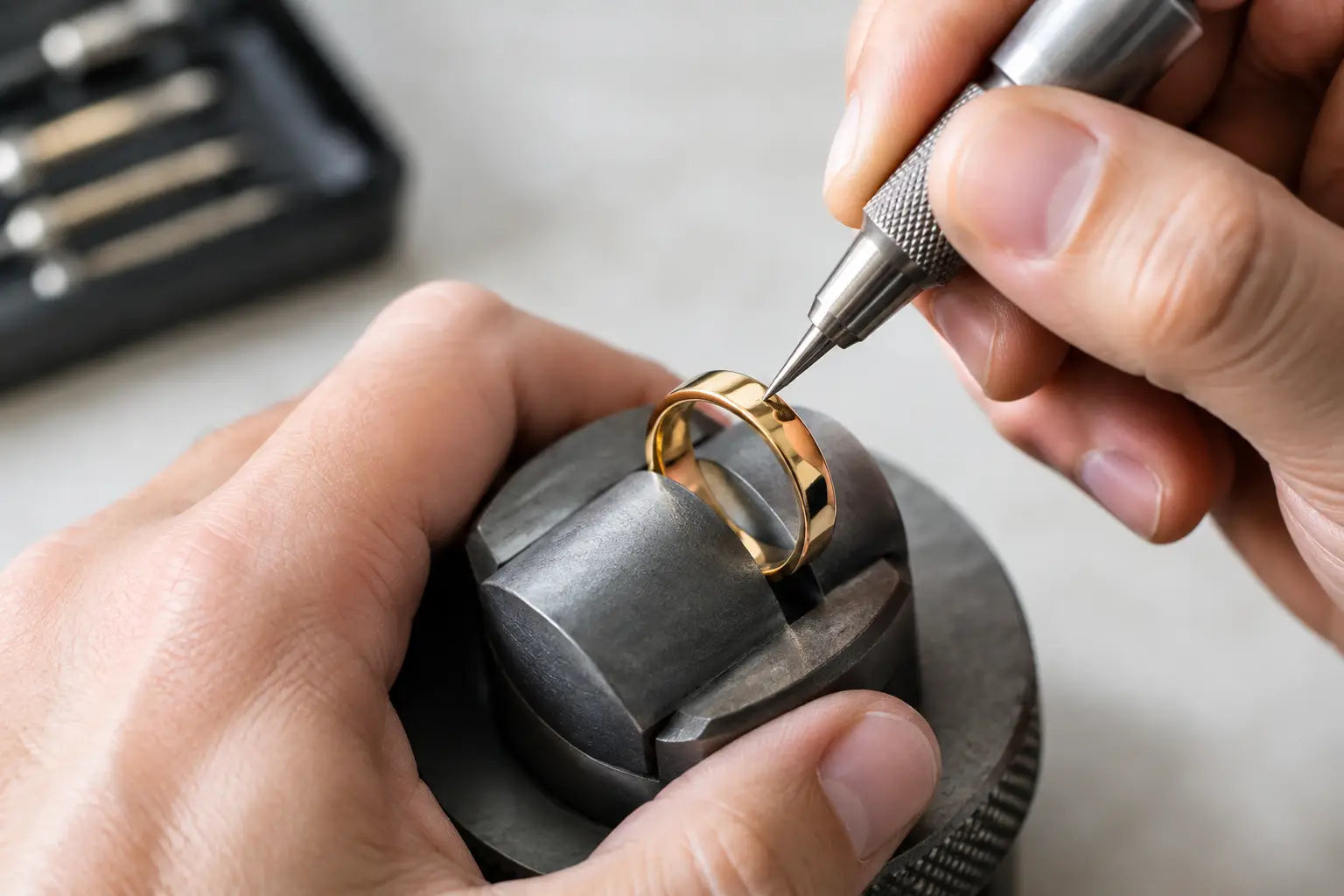
For a ring that needs to go down in size, the jeweller usually removes a small piece from the underside of the shank, brings the ends together and solders them. The ring is then rounded, polished and checked for strength. This tends to work best when the adjustment is modest and the band is plain at the back.
Making a ring larger can be done in two ways. For a very small increase, some bands can be gently stretched. This is not suitable for every metal or style, and stretching can make a band thinner. For a larger increase, a jeweller cuts the shank and adds a matching section of metal before refinishing the ring.
The bigger the size change, the more the ring’s proportions can shift. Going up or down one size is generally more straightforward than moving three or four sizes. If a major alteration is needed, a replacement may look better, feel more comfortable and offer better long-term value.
Engraving deserves a mention. If your inscription runs around the entire inside of the band, resizing may interrupt it. A good jeweller can sometimes re-engrave the altered area, but ask before work begins, especially if the message includes a date, handwriting or a personal phrase you want preserved exactly.
Rings with diamonds or stones need closer inspection
A wedding band set with a few stones across the top can sometimes be resized, provided the jeweller has enough plain metal at the base. They will inspect the settings afterwards because altering the band can affect how securely stones sit.
Eternity rings are more complicated. With diamonds, moissanite or other stones set all the way around, there is little or no plain section to work with. Changing the circumference can distort the setting pattern, create visible gaps or loosen stones. Some eternity styles can be altered by a specialist, but many are best exchanged or remade in the correct size.
This is one reason a full eternity band should be sized especially carefully before purchase. Its unbroken sparkle is exactly what makes it special, but it leaves less room for future changes.
What affects whether resizing is worth it?
The condition and age of the ring matter as much as its design. A well-made band in good condition is a stronger candidate for resizing than one that is already thin, heavily scratched, cracked or worn at the edges. Repeated resizing removes or changes metal over time, so it is not something to treat as a permanent fix for frequent size fluctuations.
Your actual fit is worth checking carefully too. Fingers change size throughout the day and through the year. Heat, cold, exercise, salty food, pregnancy, certain medications and weight changes can all affect how a ring feels. A band that is tight after a long summer day may fit perfectly in cooler weather.
Aim for a ring that passes over the knuckle with gentle resistance, then sits securely at the base of the finger. It should not leave a deep, painful mark or require soap and a battle to remove. If you are unsure, measure more than once at different times of day rather than relying on a single quick test.
Band width changes the experience as well. A wide wedding ring covers more skin and usually feels tighter than a slim band in the same measured size. If you are choosing a broad, chunky or double-inlay design, consider getting properly sized for that width instead of assuming your usual ring size will translate exactly.
When an exchange or replacement makes more sense
Resizing is not always the best answer, particularly with a new ring. If you have only just received it and the fit is clearly wrong, an exchange for the correct size can protect the original design, finish and structure. This is especially useful for rings made from non-resizable materials or those with elaborate inlays and stone settings.
It can also be the better choice when your size has changed significantly. A band altered too far may no longer keep its original proportions. The repaired point can be more noticeable, intricate details may no longer line up, and a previously balanced design can feel different on the hand.
For couples buying online, the lowest-stress route is to check the retailer’s sizing and exchange support before placing the order. A free ring sizer gives you a far better starting point than guessing, while an easy exchange policy takes the pressure out of choosing between two close sizes. Rock Solid Rings offers both sizing support and no-quibble returns, helping you focus on finding a band you genuinely want to wear every day.
Do not force a ring that is stuck
If a ring is uncomfortably tight, swollen fingers can make removal difficult fast. Avoid pulling aggressively, as that can cause pain and increase swelling. Raise your hand, use a gentle lubricant if appropriate and seek professional help if the ring will not come off or your finger becomes numb, discoloured or very swollen. In an urgent situation, a ring can be cut and later replaced - your finger comes first.
Choosing a future-friendly wedding band
There is no wrong choice between a classic gold band and a bold scratch-resistant alternative. The best wedding ring is the one that suits your style, budget and daily life. But if you expect your size may change, perhaps because of pregnancy, health changes or a physical job, choosing a resizeable metal and a design with a plain section at the back gives you more options later.
If you love the look of tungsten, wood inlay, opal or a full eternity setting, buy it because it feels right, not because it promises easy alteration. Measure carefully, order with confidence from a retailer that makes exchanges straightforward, and keep the original details of your ring on file.
Your wedding ring is built for real life, not for a perfect sizing moment. Choose a fit that feels comfortable now, know the options if it changes, and you will be far more likely to enjoy wearing it through every celebration, commute, holiday and ordinary Tuesday ahead.
Also in Articles


Durable Rings for Work That Still Look Good
Find durable rings for work that suit your hands, job and style. Compare materials, safety needs, fit and finishes made for everyday wear without the fuss.

How to Engrave a Ring Without Getting It Wrong
Learn how to engrave a ring with the right words, font and placement, plus when a jeweller is the best choice for a clean, lasting finish.

Wide Versus Narrow Bands: Which Ring Suits You?
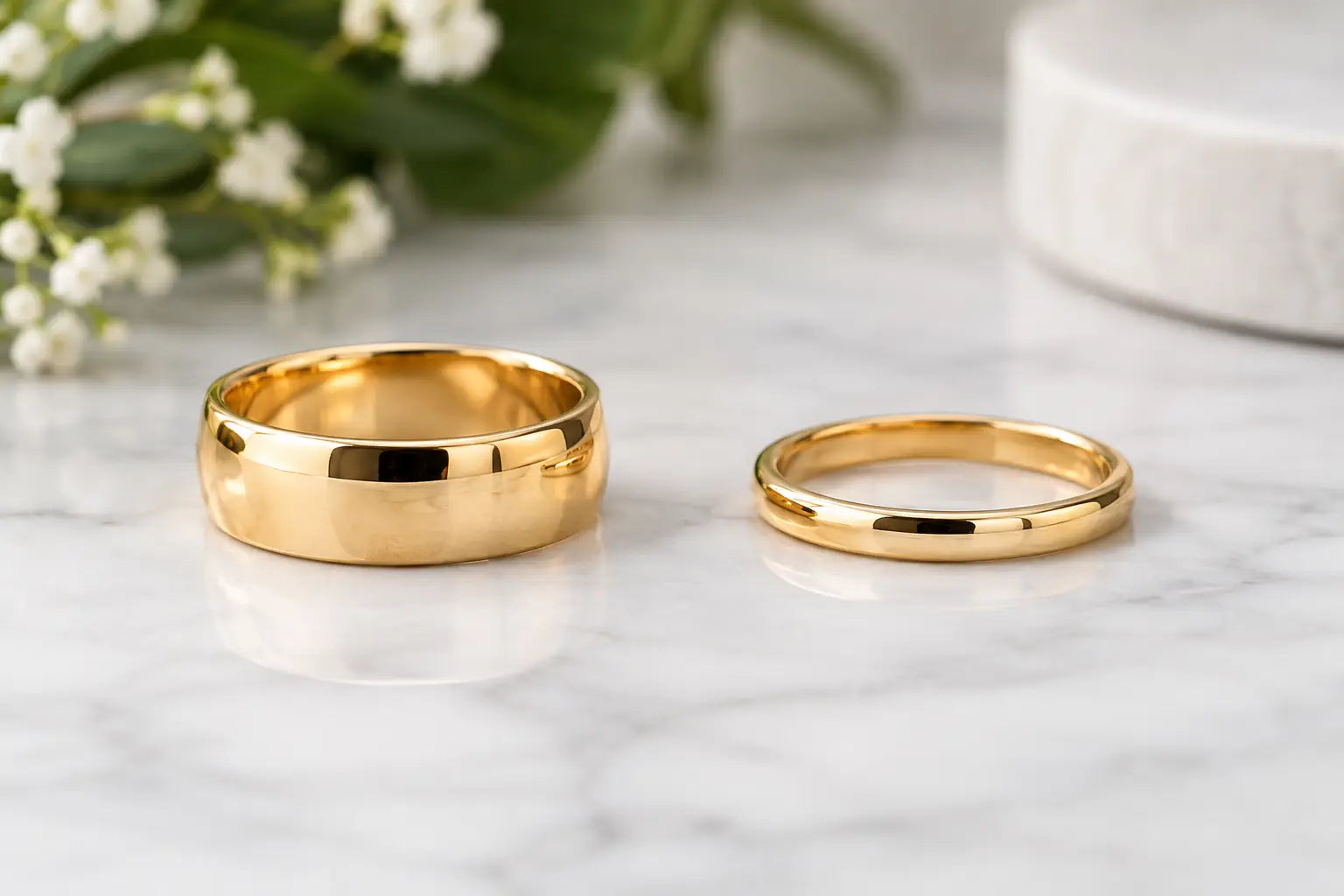
Choosing wide versus narrow bands? Compare comfort, proportions, durability and style to find a wedding or everyday ring you'll love wearing every day.
PayPal Pay Later Messaging
Step 1: Choose message placement
Click the button below and then hover over your page to select a placement.