

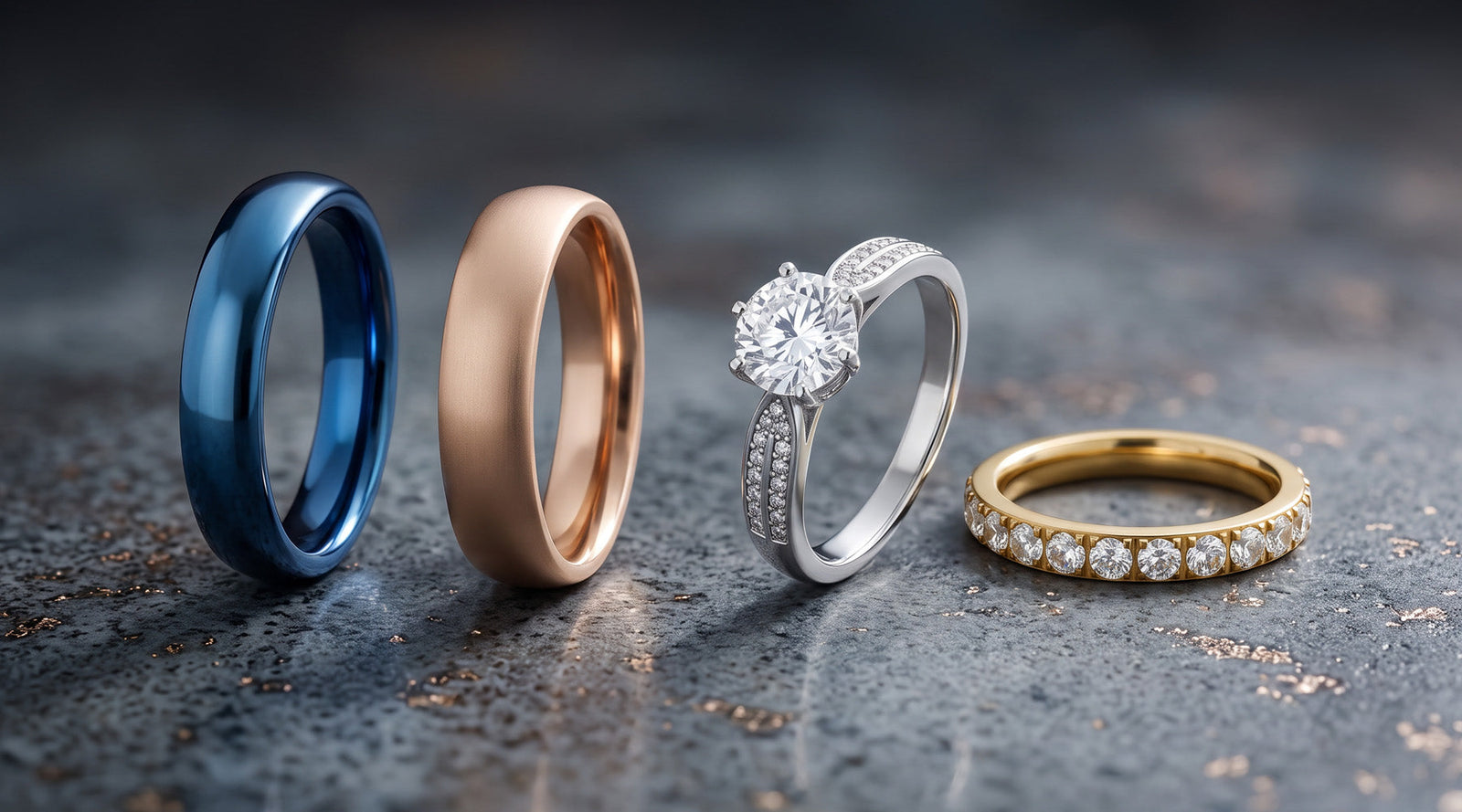

Which Is the Longest Lasting Ring Metal?
A ring can look perfect on the day it arrives, but the real test starts when it meets everyday life: gym sessions, washing up, commuting, DIY and everything in between. If you are searching for the longest lasting ring metal, tungsten carbide is often the front-runner for scratch resistance. But the best choice depends on what “lasting” means to you - staying polished, resisting dents, surviving knocks or being wearable for decades with professional care.
For a wedding band, anniversary gift or your new everyday signature piece, there is no need to choose on looks alone. Here is what each popular ring metal really offers, including the trade-offs worth knowing before you order.
What Is the Longest Lasting Ring Metal for Daily Wear?
For most people, tungsten carbide is the longest lasting ring metal when the priority is keeping a clean, polished, just-bought appearance. It is much harder than traditional precious metals, so it stands up brilliantly to the light scuffs and surface scratches that quickly show on gold, silver and platinum.
That makes tungsten a strong choice for people with hands-on jobs, active hobbies or a general dislike of taking jewellery off every five minutes. A well-made tungsten ring has a pleasing weight, a sleek premium feel and excellent scratch resistance at an accessible price point. It is also a standout option for bold black, silver, gold-tone and inlay designs.
There is one important caveat. Tungsten is extremely hard, but it is not flexible. A very sharp impact can cause it to crack or chip rather than bend. It also cannot be resized. Get the fit right from the start and treat it with sensible care, and it can remain an impressive everyday ring for years.
The Most Durable Ring Metals Compared
Tungsten carbide: best for scratch resistance
Tungsten carbide is the practical choice for someone who wants their ring to keep looking sharp with minimal fuss. It is far more resistant to everyday scratching than gold or platinum, and its density gives it a satisfyingly substantial feel on the hand.
It is particularly good for modern wedding bands, black rings and statement styles with clean bevelled edges. Bear in mind that widths can feel different from one design to another. A free ring sizer can take the guesswork out of ordering, especially if you are moving to a wider band.
Platinum: best for a lifetime precious metal ring
Platinum is not as scratch resistant as tungsten, but it has a different kind of longevity. It is a naturally white precious metal that is dense, hypoallergenic and incredibly durable. When platinum scratches, the metal is usually displaced rather than lost, creating a soft patina that many people love.
Over time, a jeweller can polish and refresh platinum. Unlike tungsten, it can also be resized in many cases. If your idea of a forever ring is a classic piece that can evolve with you, and your budget has room for it, platinum is a beautiful long-term investment.
The trade-off is simple: platinum will show wear more readily than tungsten, and it costs considerably more. It is made for those who appreciate the character that comes with a well-loved ring, rather than a permanently high-shine surface.
Titanium: best for lightweight strength
Titanium is strong, corrosion resistant and remarkably light. If you dislike the weight of a chunky ring, titanium gives you serious durability without the heavy feel. It is a smart option for active lifestyles and a favourite for men who want a subtle, comfortable wedding band.
It does scratch over time, although usually less obviously than softer precious metals. Like tungsten, titanium is difficult or impossible to resize depending on the design. It is also less dense, so it does not deliver the same weighty feel that some shoppers associate with luxury jewellery.
Gold: best for tradition and easy resizing
Gold will always have a place in wedding and fine jewellery. It is warm, timeless and available in yellow, white and rose shades, making it easy to match with existing pieces. Gold is also one of the more practical choices if future resizing matters.
However, gold is an alloy, and its durability varies. Higher-carat gold contains more pure gold and is softer. For an everyday ring, 9ct or 14ct gold is generally more hard-wearing than 18ct, while still delivering that unmistakable precious-metal appeal. White gold may also need occasional rhodium plating to restore its bright white finish.
Gold is not the winner if you want maximum scratch resistance. It is the winner if you want classic beauty, meaningful value and a ring that can be repaired or adjusted as life changes.
Cobalt and stainless steel: durable value choices
Cobalt and stainless steel offer excellent durability for their price. Both are strong, easy to wear and suit clean, contemporary styles. Cobalt has a bright white look and can be more scratch resistant than traditional precious metals, while stainless steel is a reliable choice for affordable fashion rings.
Neither has the prestige or serviceability of platinum and gold, but they can be ideal when style, budget and low-maintenance wear are the main goals. As with all rings, quality of finish and design matters just as much as the material name.
The Metal Is Only Part of the Durability Story
A hard metal can still have vulnerable details. This matters particularly for rings with opal, wood inlay, shell, carbon fibre or other distinctive centre features. These designs bring personality and colour that plain metal cannot match, but their inlays may need more care than the outer band.
Opal, for example, is far softer than tungsten or titanium. A tungsten ring with an opal inlay still has a tough outer structure, but the opal should not be treated like solid tungsten. Take it off for heavy manual work, contact sports, harsh cleaning products and any task where a direct blow is likely.
The same thinking applies to plated finishes. Black, gold-tone or rose-tone rings can look fantastic, but the surface finish may gradually wear in high-contact areas. That is normal jewellery wear, not necessarily a problem with the underlying metal. If a flawless finish for as long as possible is your priority, choose a solid-colour metal and a design with fewer exposed decorative details.
How to Make Any Ring Last Longer
The best everyday ring is the one that fits properly and suits your real routine. A band that spins constantly or feels too tight will be irritating, and it is more likely to get knocked as you adjust it. Check your size carefully, remembering that fingers can swell in heat and after exercise.
Remove your ring before weight training, gardening, decorating or handling strong chemicals. This is sensible even with tungsten. Hard metals resist scratches, but no ring is invincible, and softer stones or inlays need extra protection.
Clean plain metal bands with warm water, mild soap and a soft cloth, then dry them thoroughly. Avoid abrasive cleaners, particularly on plated rings and styles with stones. Store rings separately when you are not wearing them so one piece of jewellery does not rub against another.
It is also worth matching your choice to your expectations. If a tiny mark will annoy you, tungsten is likely to make you happiest. If you value a precious metal that can be resized, polished and passed on, gold or platinum may be the better fit. Durability is not only about hardness - it is about how confidently a ring fits into your life.
Choose the Ring You Will Actually Love Wearing
The most durable ring on paper is not automatically the right one for every hand, job or occasion. Tungsten carbide is hard to beat for a polished, scratch-resistant everyday look, while platinum and gold offer the reassurance of repairability and traditional precious-metal value. Titanium brings lightweight strength, and detailed inlay rings let you put personal style first with a little extra care.
At Rock Solid Rings, the aim is to make that choice feel exciting rather than stressful, with designs built for big moments and ordinary Mondays alike. Choose the metal that matches your routine, confirm the size before ordering, and let the ring earn its story one day at a time.
Also in Articles


Durable Rings for Work That Still Look Good
Find durable rings for work that suit your hands, job and style. Compare materials, safety needs, fit and finishes made for everyday wear without the fuss.
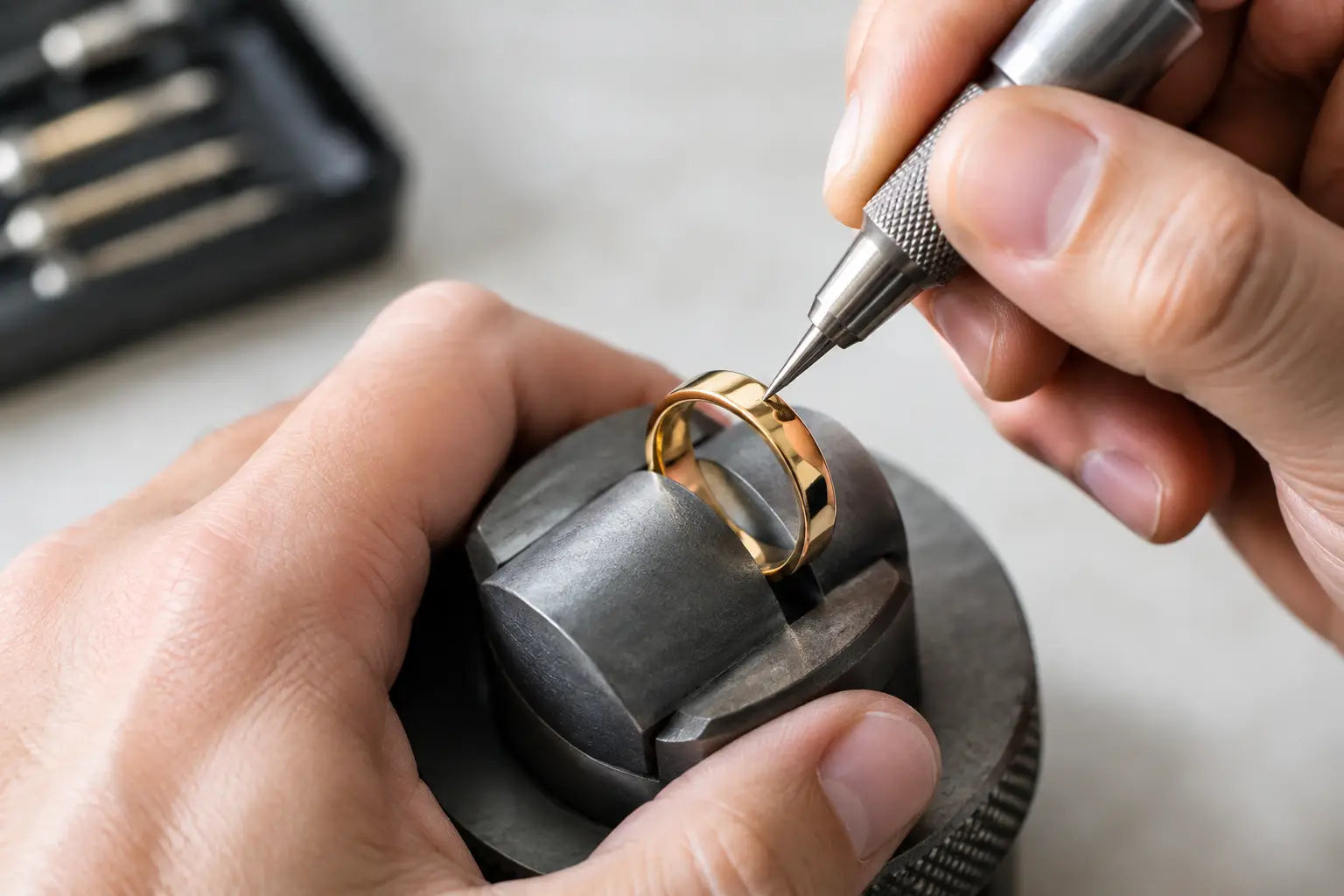

How to Engrave a Ring Without Getting It Wrong
Learn how to engrave a ring with the right words, font and placement, plus when a jeweller is the best choice for a clean, lasting finish.
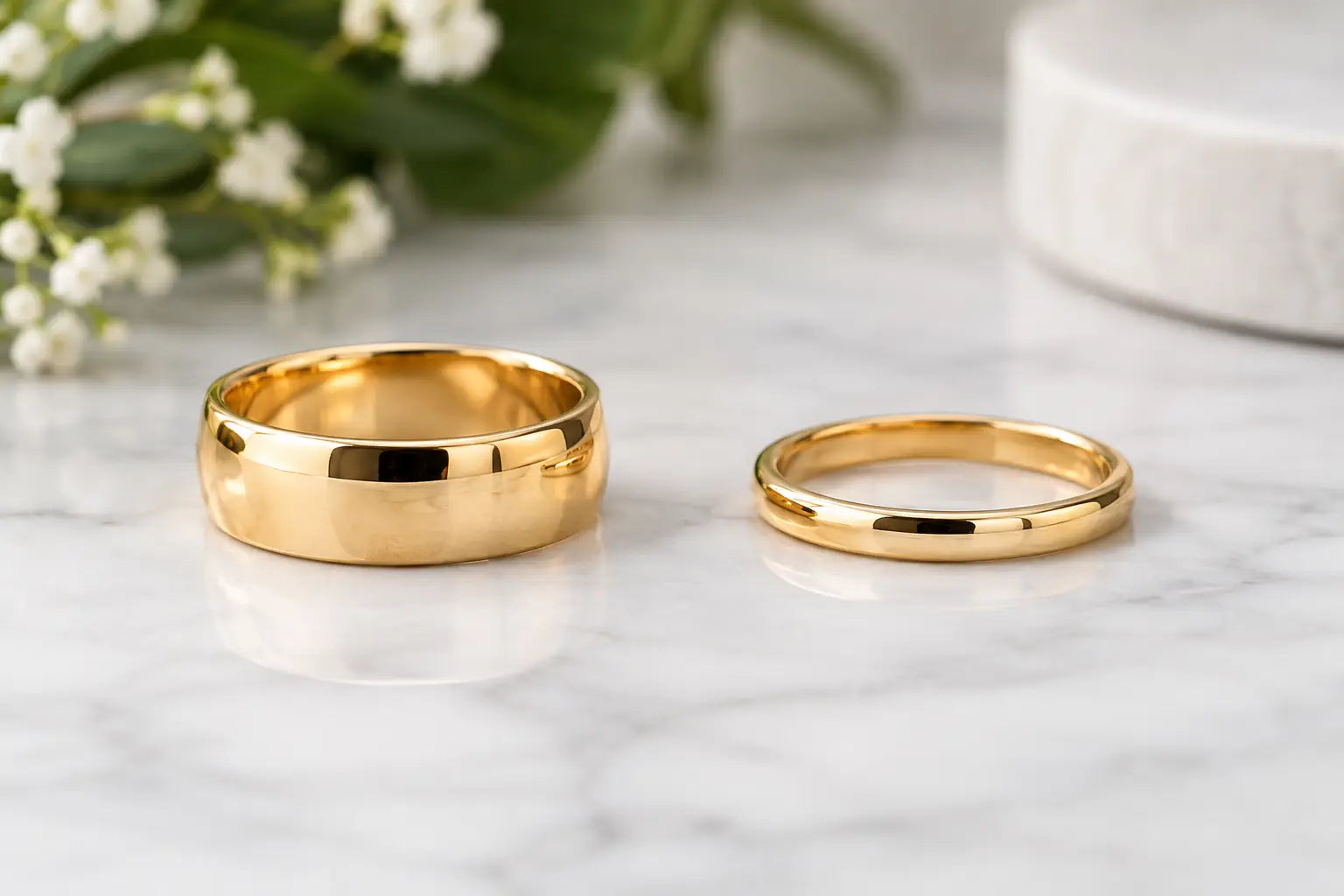

Wide Versus Narrow Bands: Which Ring Suits You?
Choosing wide versus narrow bands? Compare comfort, proportions, durability and style to find a wedding or everyday ring you'll love wearing every day.
PayPal Pay Later Messaging
Step 1: Choose message placement
Click the button below and then hover over your page to select a placement.